
"Kilimanjaro peaberry"
300 article(s) found

Simple, straightforward and enthusiastic coffee cultivation in Tanzania: a brief introduction to climate and altitude
Coffee is one of the main cash crops in Tanzania, ranking fourth after cotton, tobacco and cashew nuts, mainly sold to Italy, Japan and the United States. Coffee exports play an important role in the national economy of Tanzania. Tanzania's main coffee producing area is located at the foot of Mount Kilimanjaro, which is rich in volcanic soil and coffee trees planted here.

Introduction to the characteristics of the moderate mellow thickness of Tanzania Kilimanjaro coffee flavor manor
Tanzania is an East African country south of the equator, bordered by Uganda and Kenya to the north and the Republic of the Congo, Rwanda and Burundi to the west. It is hot and humid all the year round, with an average temperature of 21-25 ℃ in most areas. Precipitation is divided into long and short rainy seasons, and the annual precipitation is abundant. The economy is based on agriculture, coffee is one of the main cash crops in Tanzania, in Tanzania, Arabica coffee

Description of coffee flavor in Tanzania introduction to the treatment of taste grinding degree of high-quality coffee beans
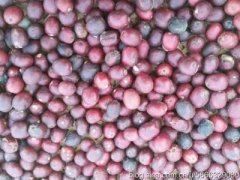
Tanzanian coffee is mostly washed. After picking, coffee farmers will send the coffee fruit to the nearest processing plant for processing. The treatment step of the water washing method is to screen and remove the impurities in the coffee fruit, then remove the coffee pulp and exocarp, send it into the fermentation tank, and remove the pectin layer from the inner pericarp by fermentation. Clean
Description of Flavor of Fine Coffee beans in Tanzania A brief introduction to the treatment of taste grinding degree in the producing area
Moderate roasting will give off sweetness and light acidity, deep roasting will produce soft bitterness, suitable for blending coffee types: medium concentration coffee description: refreshing acidity and medium mellow complement blackcurrant and mandarin orange flavors processing method: washing method with flavors: blackcurrant, orange and lemon similar coffee: Kenya coffee from Tanzania

The origin and development of coffee in Tanzania with soft texture is a brief introduction to culture.
The coffee beans produced here are all exported from Kilimanjaro, but in addition to Mount Kilimanjaro, there are several major coffee producing areas throughout Tanzania, there are more small farms in other areas, and most small farms also have a planting area of several hundred mu. Some have their own washing equipment and bean drying farms, but the grading treatment still has to go through large-scale treatment.

Introduction to the characteristics of coffee flavor and taste of sweet citrus and floral aroma coffee manor in Arusha, Tanzania
Coffee is one of the main cash crops in Tanzania, ranking fourth after cotton, tobacco and cashew nuts, mainly sold to Italy, Japan and the United States. Coffee exports play an important role in the national economy of Tanzania. Tanzania's main coffee producing area is located at the foot of Mount Kilimanjaro, which is rich in volcanic soil and coffee trees planted here.

Coffee Culture in Tanzania
Coffee is one of the main cash crops in Tanzania, ranking fourth after cotton, tobacco and cashew nuts, mainly sold to Italy, Japan and the United States. Coffee exports play an important role in the national economy of Tanzania. Tanzania's main coffee producing area is located at the foot of Mount Kilimanjaro, which is rich in volcanic soil and coffee trees planted here.

Coffee flavor, one of the main cash crops in Tanzania, introduces Arusha Coffee Manor.
Coffee is one of the main cash crops in Tanzania, ranking fourth after cotton, tobacco and cashew nuts, mainly sold to Italy, Japan and the United States. Coffee exports play an important role in the national economy of Tanzania. Tanzania's main coffee producing area is located at the foot of Mount Kilimanjaro, which is rich in volcanic soil and coffee trees planted here.

Tanzania Coffee Jilimanjaro Mountain Fire area with excellent taste
The coffee beans produced here are all exported from Kilimanjaro, but in addition to Mount Kilimanjaro, there are several major coffee producing areas throughout Tanzania, there are more small farms in other areas, and most small farms also have a planting area of several hundred mu. Some have their own washing equipment and bean drying farms, but the grading treatment still has to go through large-scale treatment.

Excellent Taste of Tanzanian Coffee Flavor description Taste treatment method characteristics of Manor
Kilimanjaro AA is the highest grade of beans, its grains are full, pure flavor, rich and refreshing, all aspects of quality are good. It is usually more acidic than Kenya coffee and evenly stimulates the taste buds in the middle and sides of the back of the tongue, feeling a bit like the sour taste of tomato or soda. After moderate or more moderate baking, it has a strong aroma, then grind it into a fine powder and add it.

Kilimanjaro Coffee Flavor description Grinding degree treatment characteristics introduction to the taste of varieties in producing areas
Tanzania is an East African country south of the equator, bordered by Uganda and Kenya to the north and the Republic of the Congo, Rwanda and Burundi to the west. It is hot and humid all the year round, with an average temperature of 21-25 ℃ in most areas. Precipitation is divided into long and short rainy seasons, and the annual precipitation is abundant. The economy is based on agriculture, coffee is one of the main cash crops in Tanzania, in Tanzania, Arabica coffee

Peaceful and full-bodied coffee manor in Arusha, Tanzania, the planting market price of fine coffee bean varieties is simple.
Raw beans: raw beans are unbaked beans, which contain 11.5% fat; 11.5% moisture; 28.6% crude fiber; 4.0% minerals; 6.2% tannic acid; 1.3% caffeine; 17.0% essence; 8.1% sugar; 11.8% protein. Baked beans: baked beans containing 13.0% fat; 1.5% caffeine; 29.5% crude fiber; 2.6% moisture; 5.0% minerals

Description of the Flavor of Kilimanjaro Coffee in Tanzania; introduction to the taste of varieties in producing areas
The types of rainfall can be divided into bimodal distribution and unimodal distribution. The areas with double bee rainfall include the provinces around the Lake Victoria basin, the northeast highlands, the coastal and inland northeastern. The bimodal rainfall area is characterized by two rainy seasons. The short rainy season occurs from September to December. The total rainfall can reach 200-500 mm. The long rainy season occurs from March to May.

Coffee flavor and taste of one of the main cash crops in Tanzania A brief introduction to Arusha Coffee Manor
The coffee beans produced here are all exported from Kilimanjaro, but in addition to Mount Kilimanjaro, there are several major coffee producing areas throughout Tanzania, there are more small farms in other areas, and most small farms also have a planting area of several hundred mu. Some have their own washing equipment and bean drying farms, but the grading treatment still has to go through large-scale treatment.

Introduction of Tanzania boutique coffee beans Kilimanjaro Coffee Flavor taste Manor
Antigua Island (Antigua) is a famous producer of coffee. Rich volcanic soil, low humidity, strong sunlight and cool night winds are the characteristics of Antigua. Three spectacular active volcanoes ── Agua, Acatenango and Fuego form a beautiful valley. Fuego active volcano also adds misty dust from time to time. Every 3

A brief introduction to the simple, straightforward and enthusiastic coffee culture and growing environment of Tanzania
The famous coffee brands in Tanzania are Africafe, Tanica Cafe, Kilimanjaro and so on, and their quality is much better than the Nestle coffee we often drink. Tanzanian coffee has long been loved by Europeans and has joined the ranks of famous products. Europeans give Tanzania coffee gentleman a nickname, and Chinese coffee connoisseurs associate it with the king of coffee, Blue Mountain and coffee.

Introduction to the characteristics of flavor description of coffee manor in Arusha, Tanzania with refreshing acidity
Tanzania covers an area of 945087 square kilometers, of which Zanzibar is 2657 square kilometers. It consists of the mainland, Zanzibar and more than 20 small islands. Located in eastern Africa and south of the equator, the continent is bounded by the Indian Ocean to the east, Zambia, Malawi and Mozambique to the south, Rwanda, Burundi and the Democratic Republic of the Congo to the west, and Kenya and Uganda to the north. The coastline of the mainland is 840 kilometers long.

Description of coffee flavor in Kilimanjaro, Tanzania introduction to the treatment of grinding degree and baking degree
Tanzania is an East African country south of the equator, bordered by Uganda and Kenya to the north and the Republic of the Congo, Rwanda and Burundi to the west. It is hot and humid all the year round, with an average temperature of 21-25 ℃ in most areas. Precipitation is divided into long and short rainy seasons, and the annual precipitation is abundant. The economy is based on agriculture, coffee is one of the main cash crops in Tanzania, in Tanzania, Arabica coffee

Great taste Tanzanian coffee flavor Taste Manor Features Kilimanjaro Coffee
Tanzania is rich in mineral resources. As of 2014, the main proven minerals include gold, diamond, iron, nickel, phosphate, coal and various gemstones, ranking fifth in Africa in total. Tanzania's natural gas reserves are also very large. According to Tanzania's official data, Tanzania has proven natural gas reserves of 44 trillion cubic feet, and the total reserves are expected to be at least

An introduction to the flavor and taste of Tanzania's boutique coffee beans and the characteristics of the manor.
Tanzania's main coffee producing area, located at the foot of Mount Kilimanjaro, is rich in volcanic soil. Some coffee trees planted here are more than 100 years old. Coffee was first introduced by Christians from Kenya to grow coffee. Coffee trees must be carefully taken care of, weeded and fertilized. And old branches must be cut off so that new branches can grow to maintain the quality of coffee beans.